

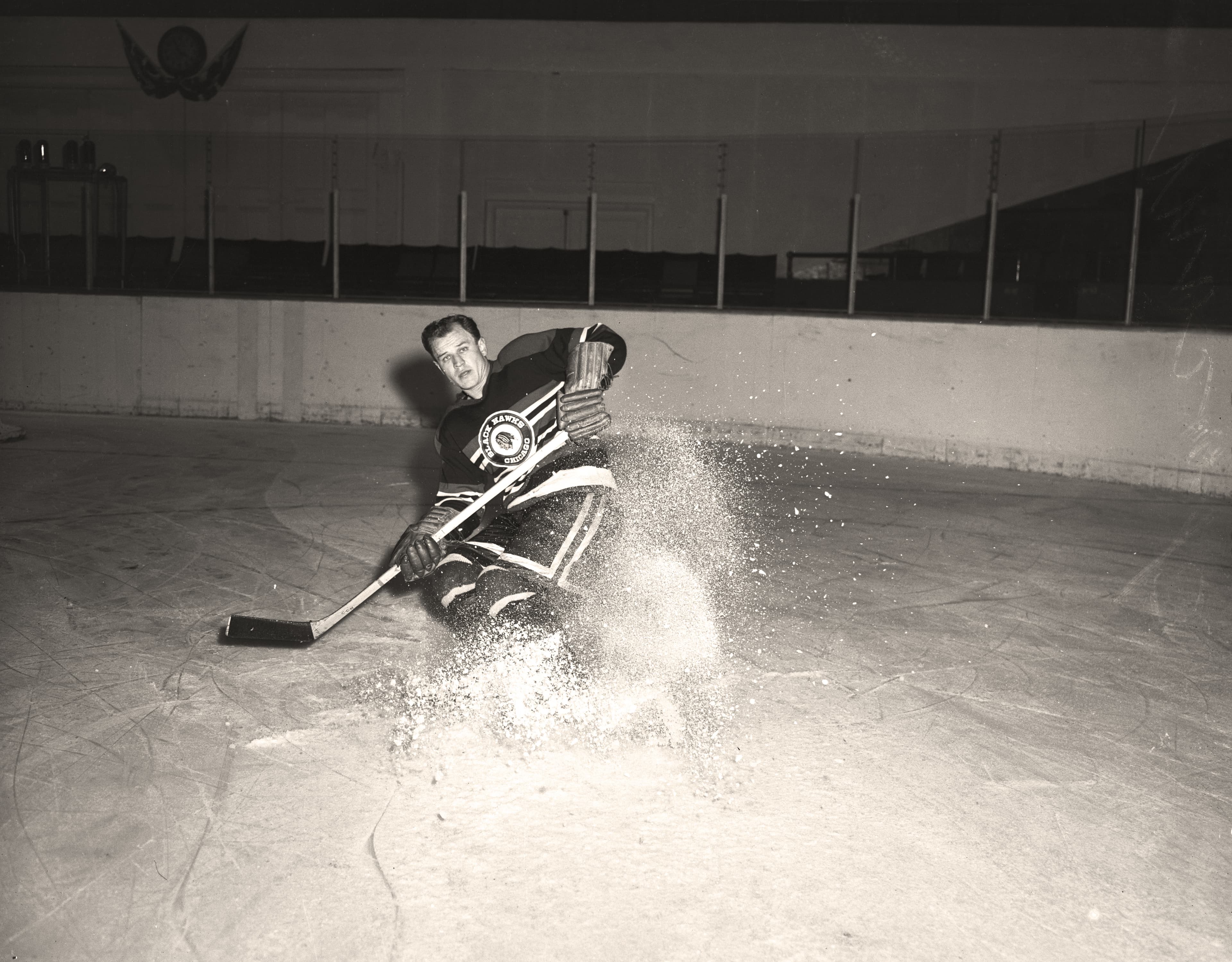

Mosienko's mark still stands today
"Lightning in a Beer Bottle." It began as a throwaway line — the kind of locker-room musing that fades as quickly as it’s spoken.
On the eve of a meaningless late-season game in 1952, Billy Mosienko, a smallish winger from Winnipeg’s North End, casually remarked that he’d love to do something to get his name into the record book. Less than 24 hours later, he didn’t just make history — he shattered it in a way that still defies belief.
On March 23, 1952, inside a half-empty Madison Square Garden, Mosienko caught what he famously called “lightning in a beer bottle.” In a span of just 21 seconds, he scored three goals — a National Hockey League record that, more than seven decades later, still stands untouched.
At the time, there was little reason to expect anything remarkable. The Chicago Black Hawks and New York Rangers were both out of playoff contention in the NHL’s six-team era, playing out the string in front of a modest crowd of just 3,254 fans. The game itself seemed to be decided early in the third period, with the Rangers cruising to a 6-2 lead.
But hockey, as it so often does, had other plans.
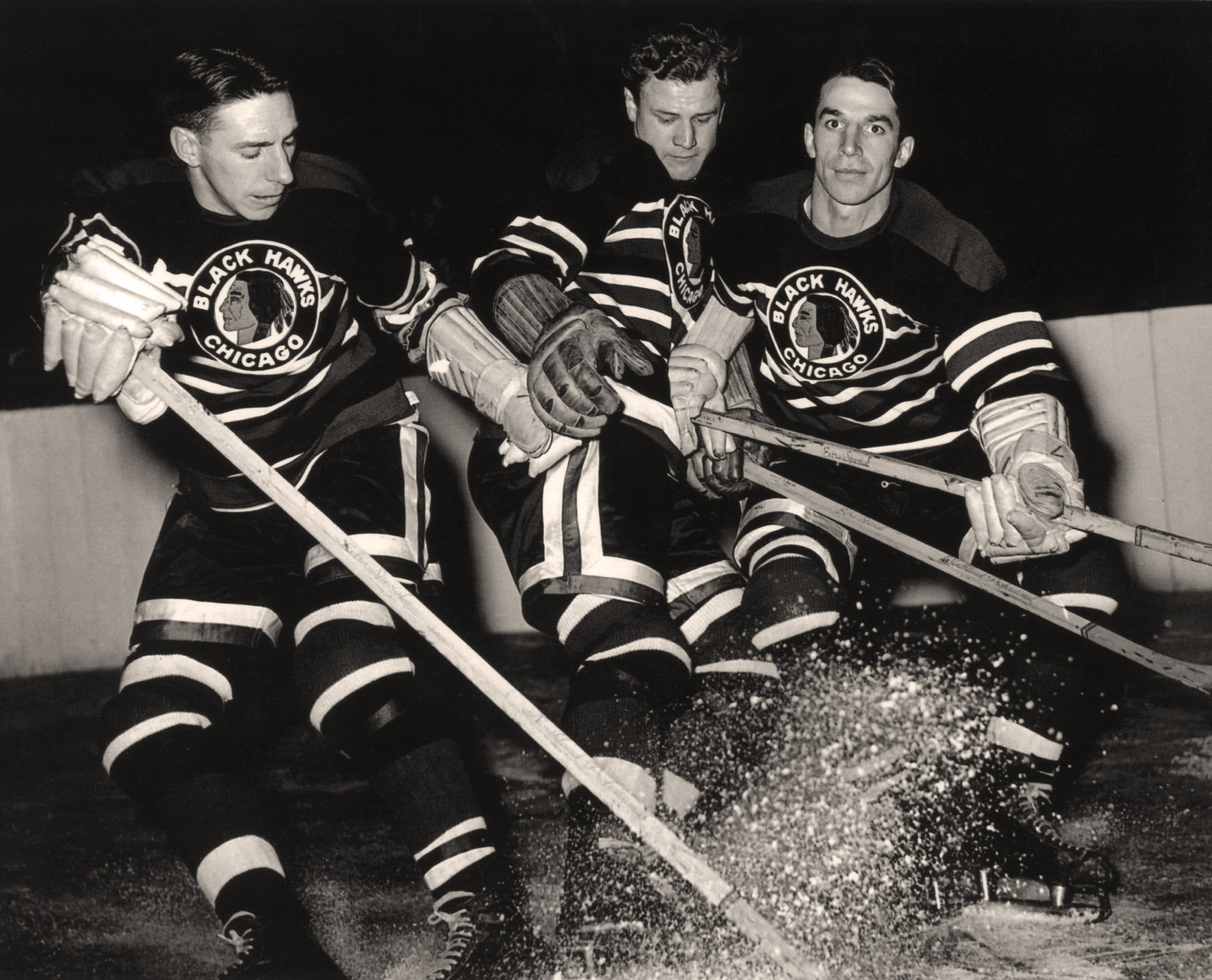
Mosienko in the middle between Doug and Max Bentley - the Pony Line
Mosienko, temporarily serving as Chicago’s captain, had already built a reputation as a gifted scorer. A product of Winnipeg’s North End, he’d honed his game in local rinks before starring with the Winnipeg Monarchs and eventually joining the Black Hawks in the early 1940s. Alongside Max and Doug Bentley, he was part of the famed “Pony Line,” one of the most dynamic forward units of the era.
Still, nothing in his accomplished career hinted at what was about to unfold.
The Rangers, for their part, were limping through the finale. With their top goaltenders unavailable, they turned to third-string netminder Lorne Anderson, who had already played a full game earlier that day with the Rangers’ farm team. On defense, Hy Buller — chasing a franchise record — suited up despite a cracked ankle. It was a patchwork lineup in a game that meant little.
Until, suddenly, it meant everything.
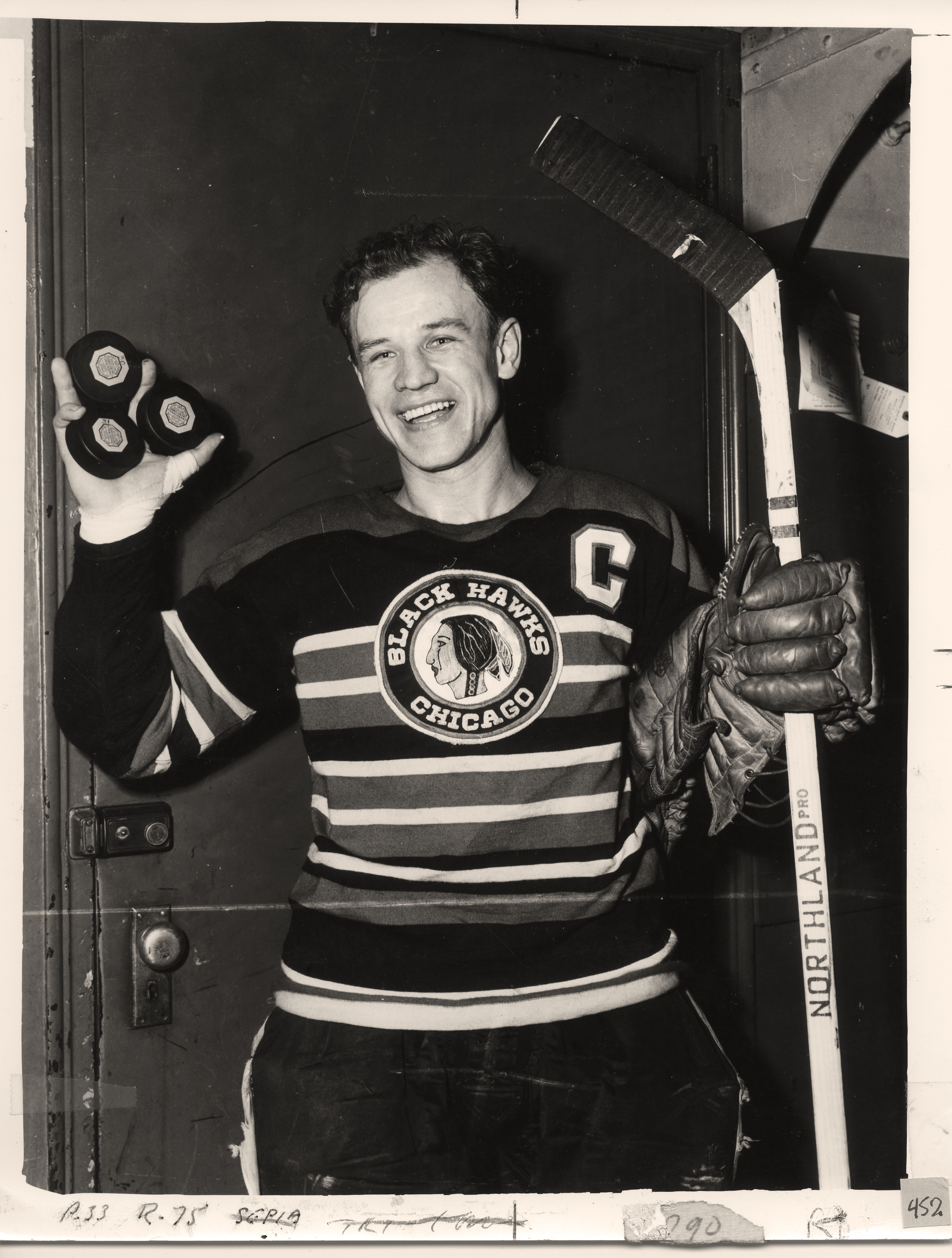
The Polaroid of the Record
At 6:09 of the third period, Mosienko struck. Taking a pass from Gus Bodnar, he darted around Buller, cut to the net and slipped the puck under Anderson’s glove to make it 6-3. Eleven seconds later, off the ensuing faceoff, Bodnar found him again. Mosienko repeated the move — same route, same finish — and suddenly it was 6-4.
The Garden, quiet moments earlier, began to buzz.
Then came the third goal — the one that would echo through hockey history. Just 10 seconds after his second, Mosienko took a feed from George Gee, raced into the zone and, reading Anderson’s anticipation of another low shot, flipped the puck high over the glove.
Three goals. Twenty-one seconds. Bedlam.
The Rangers were stunned. The small crowd roared. And Mosienko, the unassuming winger from Winnipeg, had just authored one of the most astonishing bursts the sport has ever seen.
“It was insane,” one observer would later say — and that may be the simplest, most accurate description.
Chicago wasn’t done. Energized by the improbable rally, the Black Hawks completed the comeback, scoring twice more in the final minutes to secure a 7-6 victory. What had been a forgettable game became an immortal chapter in NHL lore.
For Mosienko, the record was the crowning moment of a stellar 14-year NHL career. Over 711 games, he scored 258 goals and 540 points, earning the Lady Byng Trophy in 1945 and multiple All-Star selections. But even among those accomplishments, the “Mosienko Miracle” stands alone — a feat so rapid, so improbable, that it feels almost mythological.
And yet, it happened.
There’s something fitting about the circumstances. A meaningless game. A small crowd. A battered opponent. Hockey, after all, has always had a flair for the unexpected. Records aren’t always born under bright lights or playoff pressure — sometimes, they emerge in the quiet corners of the schedule, when no one is watching.
Except, of course, those lucky enough to be there.
Mosienko would go on to finish his NHL career in 1955 before returning home to Winnipeg, where he continued to leave his mark on the game. He helped lead the Winnipeg Warriors to a Western Hockey League championship and remained a celebrated figure in Manitoba hockey circles. His legacy would later be cemented with induction into multiple halls of fame and the naming of a Winnipeg arena in his honour – the Billy Mosienko Arena is now home to the North Winnipeg Satelites of the capital Region Junior B Hockey League.
But no accolade, no statistic, no ceremony quite captures the magic of that March night in New York. Twenty-one seconds. Three goals. One moment that refuses to fade.
And on this date 74 years later, the record still stands — not just as a benchmark of scoring, but as a reminder of hockey’s capacity for the extraordinary. In a game where everything can change in an instant, Mosienko proved that sometimes, an instant is all it takes to become immortal.




Comments