

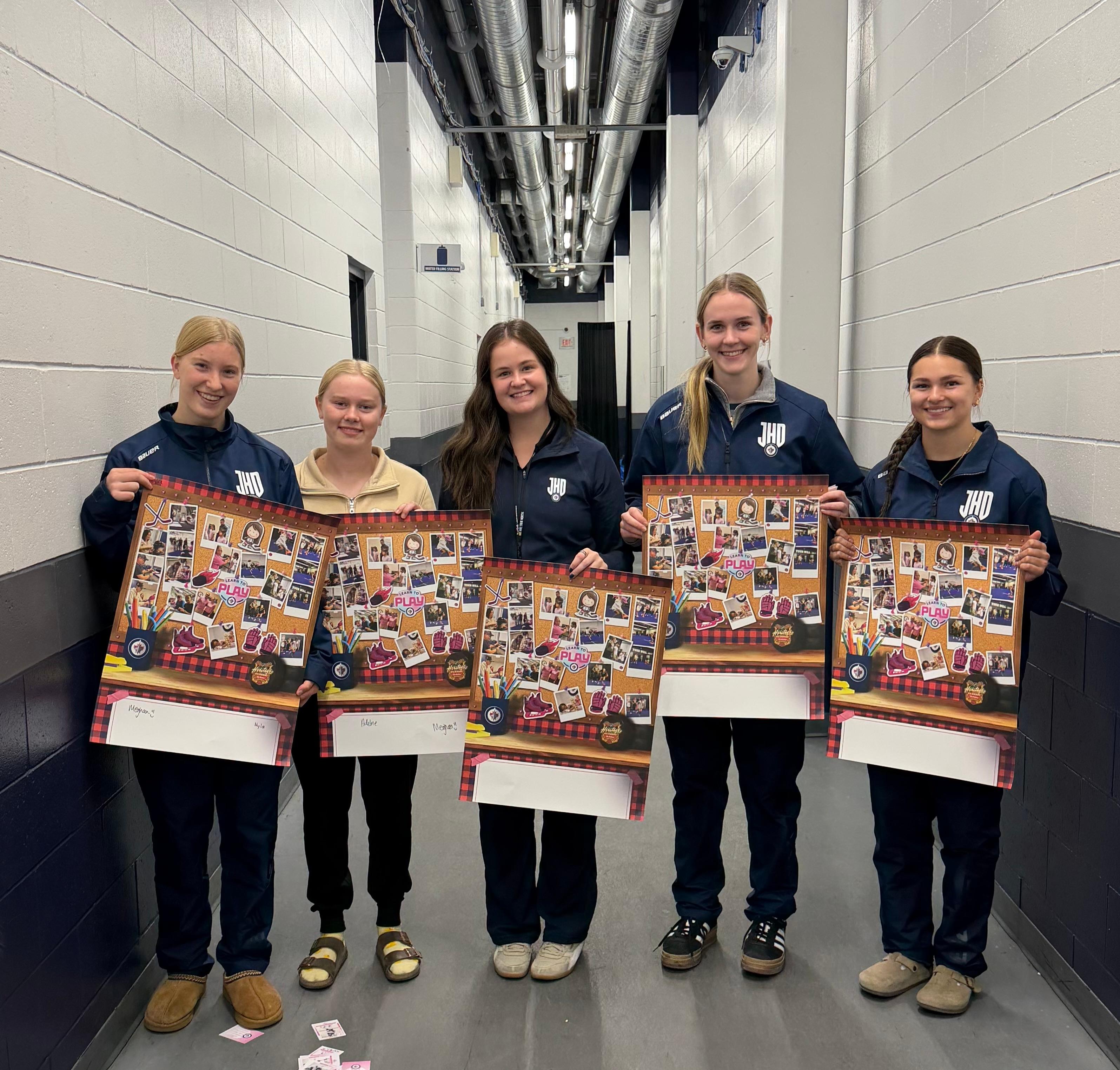

The next great Manitoba hockey player might only be six years old. She might never have worn a pair of skates. She might not know how to hold a hockey stick, and she might not even be certain she likes the game.
But thanks to the NHL, the Winnipeg Jets, hockey for all centre and a remarkable new commitment to girls' hockey, she's about to get her chance.
And that chance could change her life.
With a $150,000 investment from the National Hockey League's NHL Unites Legacy Project, along with another $30,000 from the NHL/NHLPA Industry Growth Fund, the Jets are making an impressive commitment to the future of girls' and women's hockey in Manitoba.
It's about opportunity. It's about accessibility. And perhaps most importantly, it's about making certain that every little girl who wants to play hockey has an opportunity to discover just how wonderful the game can be.
The centrepiece is the new Jets Hockey Development Girls Learn to Play program, designed specifically for girls between six and 10 who have never played hockey.
The initiative was officially launched September 2 at Winnipeg's hockey for all centre, where 40 young girls and their families gathered for an introduction to the sport.
There were equipment fittings courtesy of Bauer Canada, activities for the families, and an opportunity to meet women already making their mark in the hockey world.
There was also something considerably more important.
There was excitement.
For many of those girls, it was the beginning of a journey they might never have imagined taking. And for people such as Meghan Dubé, True North's Industry Growth Fund Program Coordinator, that's what growing the game is all about.
Dubé is part of a new generation of young women helping introduce hockey to children who might otherwise never have the opportunity to play. She's also somebody who understands the importance of giving young girls a chance to learn the game in a welcoming environment.
After all, she's been there herself.
"I grew up on hockey," Dubé said. "I played growing up and then played high school. I didn't keep playing after high school. I just started coaching."
Today, she's in her fifth year of coaching with Winnipeg East Female Hockey, the same organization where she played as a youngster. This season, she's coaching both a U15 girls' team and a high school team.
"I love it," she said. "It's so fun."
For Dubé, the experience has been particularly rewarding because of something she didn't have during her own playing days.
"I think I didn't have any female coaches growing up," she said. "So, it's nice to get to go on the ice and just spend so much time at the rink."
That observation speaks directly to the philosophy behind True North's new initiative: Young girls need opportunities to play, but they also need role models. They need to see women coaching, organizing, teaching and succeeding in hockey.
And the Jets are determined to help make that happen.
The Girls Learn to Play program features an all-woman coaching staff, equipment assistance and connections to local minor hockey associations, ensuring participants have somewhere to continue playing after their introductory experience ends.
The inaugural session recently concluded with a graduation ceremony, complete with certificates and commemorative tickets to the October 25 NHL Heritage Classic between the Jets and Montreal Canadiens.
Registration for the spring session is already open.
But the initiative goes considerably further than simply teaching 40 young girls how to skate. The additional $30,000 investment will help develop women coaches, strengthen program resources and improve player retention.
Meanwhile, the Jets will also participate in the Women's Hockey Advancement Committee Fellowship Program, offering a graduating student-athlete in 2027 a full-time, year-long opportunity to work inside the Jets organization.
It's a chance to learn the business of professional hockey through mentorship, practical experience and professional development. In other words, the Jets aren't simply creating opportunities for tomorrow's players. They're helping develop tomorrow's coaches, administrators and hockey executives.
And that might be the most important legacy of all.
For Dubé, the work is personal.
Her first job with True North involved teaching skating lessons. She eventually moved into hockey instruction, First Shift programming and tournament operations while completing her degree in recreation management and community development at the University of Manitoba.
Now she's helping open doors for the next generation.
She's also involved in the Jets' expanding floor hockey initiative, which is introducing floor hockey into approximately 65 Winnipeg School Division schools. It's another opportunity to put sticks into the hands of children who might otherwise never experience the game.
And while the floor hockey program isn't exclusively a girls' program, Dubé believes its accessibility makes it an important introduction to hockey for everyone.
"Because Hockeyball or floor hockey is so different from on-ice hockey, everyone's kind of on a level playing field," she explained.
That's particularly important when equipment costs, transportation and other barriers can prevent children from trying hockey.
The Jets are hoping to expand their school programming throughout Winnipeg and potentially into rural and First Nations communities. It's all part of a larger effort to make hockey more accessible.
As True North vice-president of marketing Annie Chipman Stockl explained in announcing the Legacy Project, growing girls' and women's hockey is essential to both the sport's future and the community's strength.
And for Dubé, who once played hockey without the benefit of female coaches, there's something wonderfully satisfying about being part of that future.

Coach Meghan Dubé of Jets Hockey Development (Photo courtesy hockey for all centre)
Because somewhere in Winnipeg, a little girl is about to step onto the ice for the very first time. She might fall. She might laugh. She might discover that skating is a little harder than it looks.
But she'll have a stick, a pair of skates, a team of women encouraging her and an opportunity to fall in love with Canada's game.
Who knows? Someday, she might even become the coach who inspires another little girl to give hockey a try.
And that's a legacy worth celebrating.








Comments