

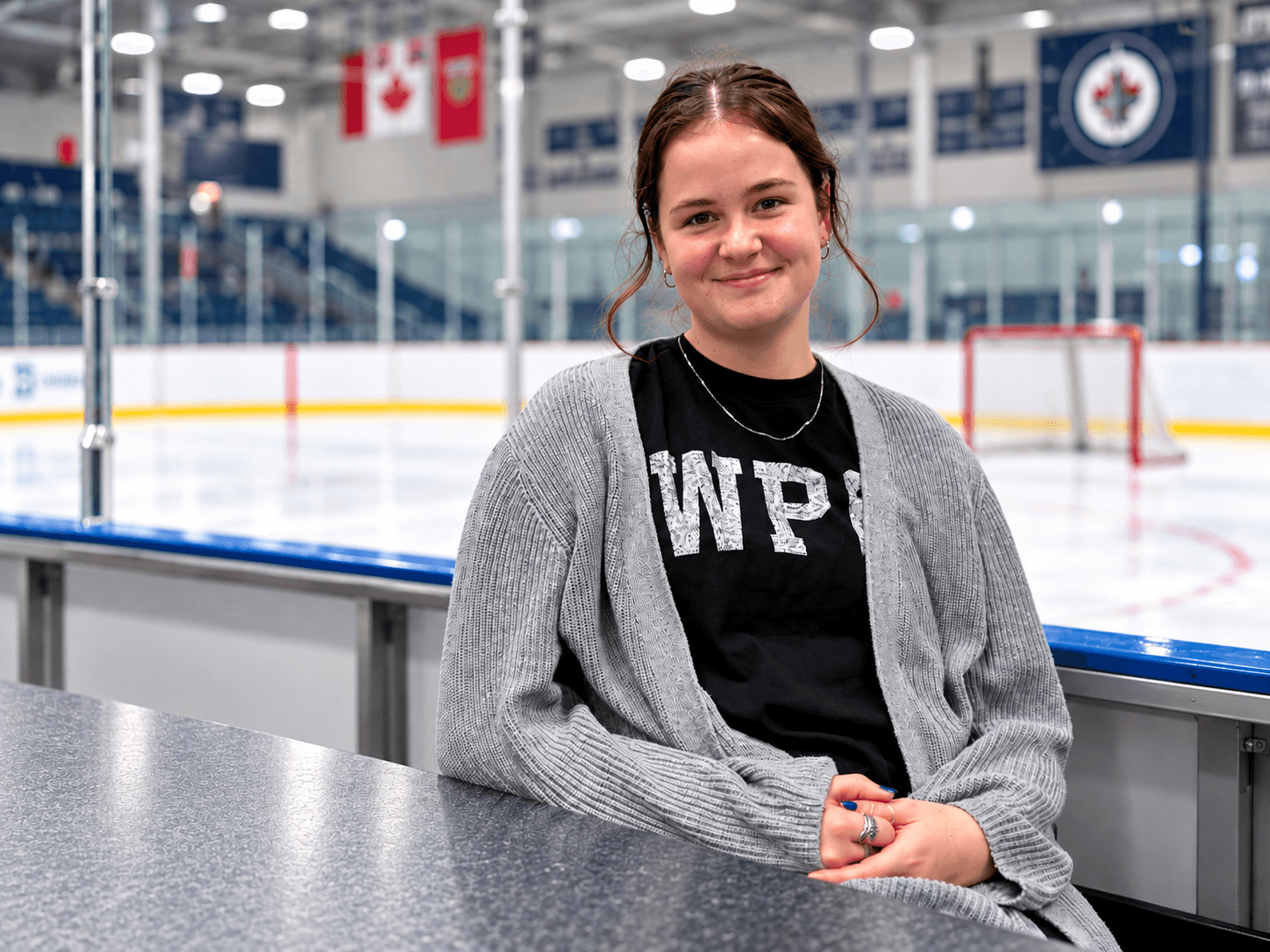

Together, the hockey for all centre and the folks from Hockeyball are taking the game into Winnipeg’s Schools. Meghan Dubé is helping to lead the charge.
Forget the expensive equipment. Forget the early-morning practices. Forget the ice time, the skates and the long drives to the rink.
Sometimes, all it takes to fall in love with hockey is a stick, a ball and a school gymnasium.
And if Meghan Dubé and the folks at hockey for all centre have their way, thousands of Winnipeg youngsters are about to discover that Canada's favourite winter game doesn't necessarily need winter — or even ice.
Welcome to floor hockey, an exciting school-based initiative designed to put hockey sticks into the hands of children who might otherwise never have the opportunity to play.
It's hockey without the barriers. And it's already making an impression.
"We're hoping within the next two years that we're able to reach all the elementary and middle schools in Winnipeg," said Dubé, the IGF Program Coordinator at hockey for all centre. "Our thought process is kind of just if we can get sticks in the hands of as many kids as possible, we're creating better athletes, more well-rounded athletes."
The initial undertaking is ambitious.
Working with the Winnipeg School Division, the program is scheduled to visit approximately 65 elementary and middle schools before Christmas. It's a pilot project with the potential to become something much bigger.
And for Dubé, who joined hockey for all centre only five months ago, it's already one of the most rewarding parts of her job.
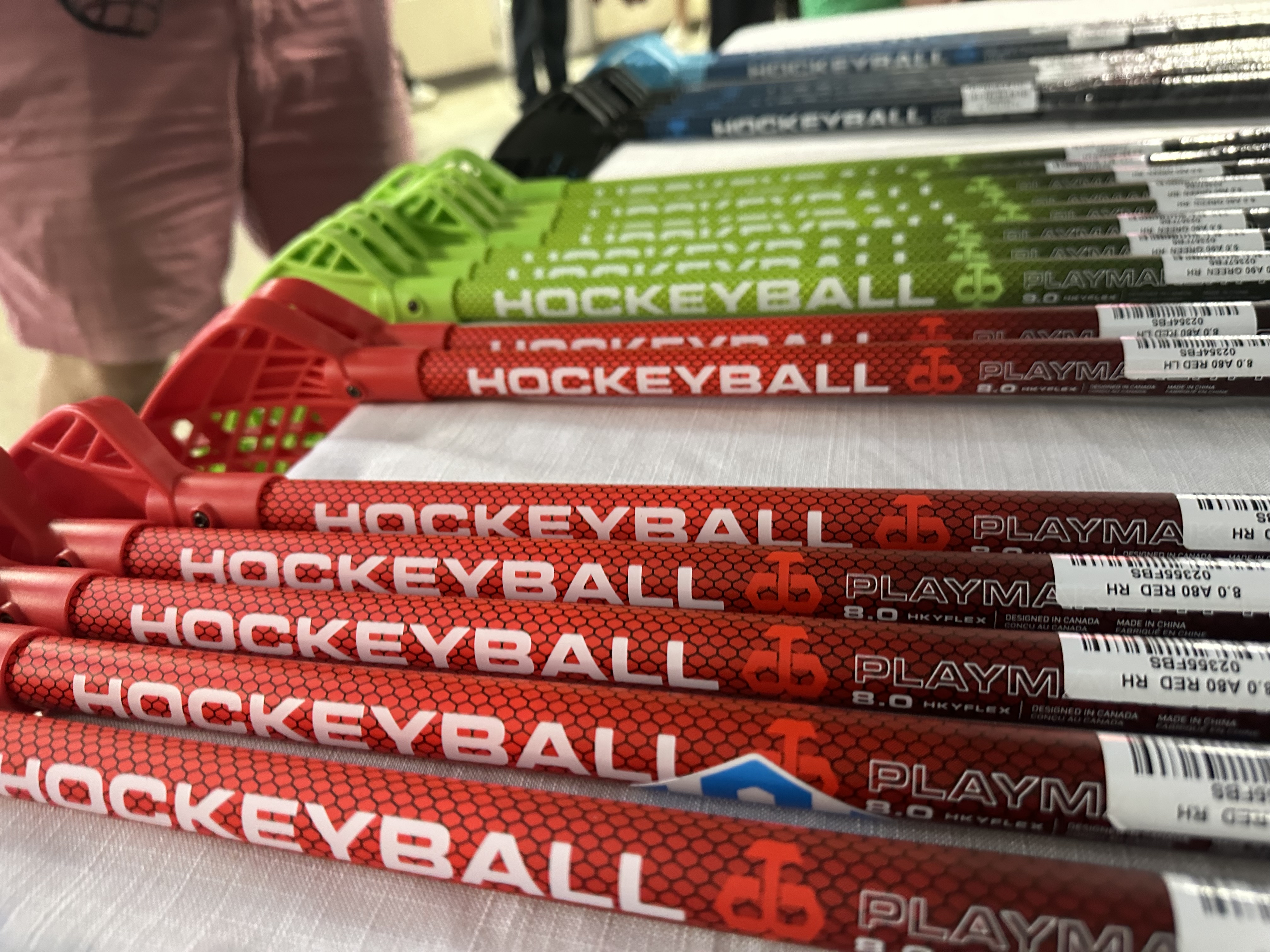
Hockeyball sticks at hockey for all centre (Photo by Jonathan Kozub)
"We've already started," she said enthusiastically. "We've done five schools already and we'll do another couple to finish off the week. The next week's fully packed as well."
The concept is beautifully simple.
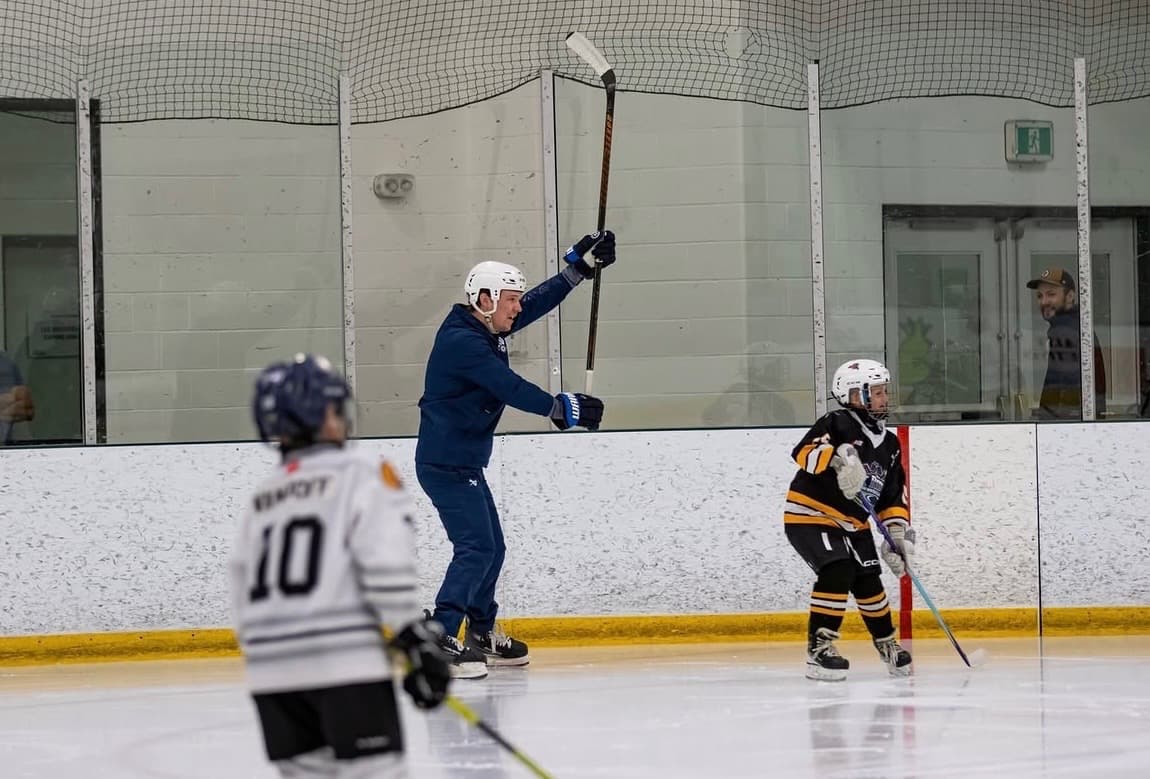
Schools can choose a half-day or full-day visit, during which floor hockey coaches work alongside physical education teachers to introduce students to the game.
Using specially designed equipment and a curriculum developed by Sport for Life, youngsters learn everything from holding a stick to controlling the ball, developing skills and eventually playing the game.
But there's something particularly interesting about floor hockey.
It doesn't necessarily matter whether a youngster has played ice hockey for years or has never picked up a stick.
The equipment and playing style are different enough that almost everyone begins on relatively equal footing.
"Today, for example, we spent time with a class where half the kids had never really played hockey and half the kids were very experienced," Dubé explained. “Because floor hockey is so different from on-ice hockey, everyone's kind of on a level playing field -- it's a new stick, it's completely different with a little ball. Everyone's on a pretty even playing field."
That's an important distinction.
For a youngster who has never played organized hockey, stepping into a gymnasium with experienced players can be intimidating.
Floor hockey with Hockeyball equipment changes that dynamic. Instead of watching the established players dominate, newcomers can participate, learn and enjoy the experience from the opening whistle. And perhaps, just perhaps, discover a sport they'll want to play for years.
The program also delivers something valuable to the teachers.
Participating schools receive a year's access to Sport for Life's PlayBuilder platform, an extensive online resource featuring drills, demonstrations, lesson plans and teaching materials for numerous sports.
"It's incredible," Dubé said. "It is so detailed. It's got drills and lesson plans and practices and demonstrations. You can create a lesson plan for your entire semester or your term in like six steps."
That means the program's impact can continue long after the floor hockey coaches have packed up their equipment and moved on to the next school.
And there's another important reason the Winnipeg School Division was selected for the pilot project: Accessibility.
For many families, organized ice hockey is simply too expensive. Between equipment, registration fees, transportation and ice time, the financial barriers can be overwhelming.
Dubé pointed out that the school division serves neighbourhoods where many youngsters might never have the opportunity to experience traditional hockey.
Floor hockey offers another door into the sport.
"Kids who might not otherwise have the opportunity to try on-ice hockey — there's just so many barriers," she said. "Equipment is expensive. To be able to give the equipment to these kids for them to try it, and then maybe steer them toward programming for kids who've never tried hockey."
It's an approach that fits perfectly with the growing emphasis on introducing children to sport before worrying about competition.
First, make it fun. Then, give them an opportunity to develop. And if some eventually graduate to ice hockey, terrific.
If they simply become more active, confident youngsters who enjoy participating in sport, that's a pretty impressive victory, too.
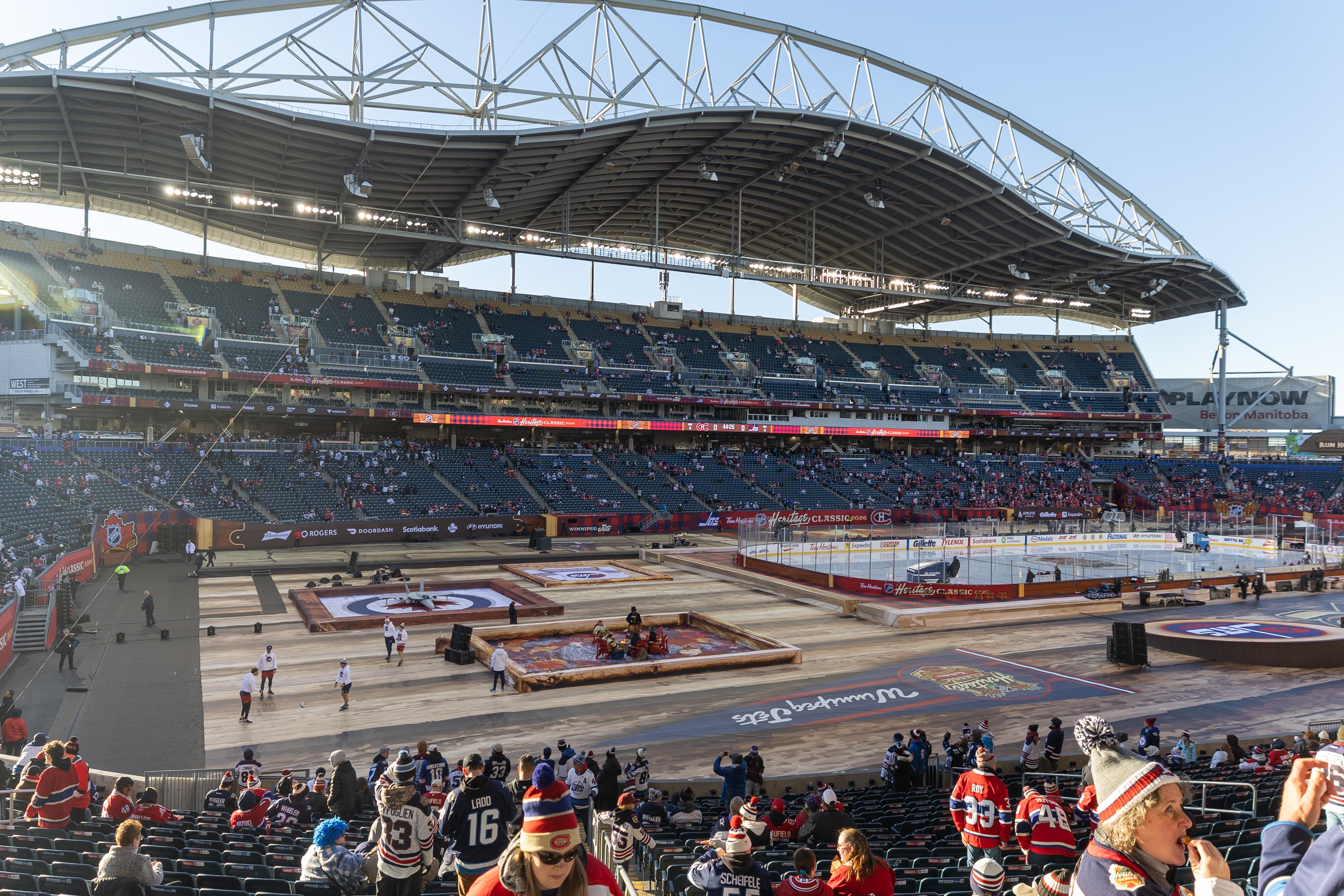
The launch received additional support from Hockeyball representatives Dave and Greg Beaudin, who travelled to Winnipeg around the NHL Heritage Classic festivities to help introduce the program and train the local coaching staff.
Dubé and two fellow coaches received hands-on instruction before assuming responsibility for delivering the program in Winnipeg schools.
"It's been really nice because we're getting hands-on training," she said. "Once Dave and Greg leave, we kind of get to take over and be the main coaches for the program."
And the initiative has already extended beyond Winnipeg.
Dubé recently travelled to Pikangikum First Nation in northwestern Ontario as part of a visit involving the NHL, former NHL player Andrew Ference and Project 11.
The Hockeyball group brought equipment and introduced the program to local educators, while Project 11 provided mental-health education and resources.
Three bags of Hockeyball equipment were donated, along with additional hockey equipment from the NHL.
"It was an amazing visit," Dubé said. "The community was awesome. They were so welcoming."
That experience has opened conversations about bringing similar opportunities to additional First Nations and remote communities. For Dubé, it's another example of how hockey can connect people regardless of geography or circumstance. And she knows a little something about that connection.
A lifelong hockey player who grew up in the Southdale and East End hockey communities, Dubé began her working career teaching skating lessons for True North.
She eventually became involved in coaching and introductory hockey programs, while also working tournaments at hockey for all centre.
After graduating from the University of Manitoba's Recreation Management and Community Development program, she joined the organization full-time. Today, her responsibilities include tournaments, girls' hockey programming and now implementing the floor hockey program.
She's also in her fifth year of coaching female hockey in Winnipeg, currently working with U15 and high school teams.
"I love it," she said. "It's so fun."
Having grown up without female coaches herself, Dubé appreciates the opportunity to become a role model for young players. And although floor hockey wasn't part of her own playing background, she has quickly recognized its possibilities.
"It's such a good pathway into ice hockey for kids who might not get to try," she said.
That's really what this program is all about: Not creating the next Stu Skinner or Mark Scheifele — although nobody would complain if that happened. It's about opportunity. It's about opening doors that have traditionally been closed by cost, circumstance or geography.
And it's about introducing youngsters to the joy of hockey before anyone starts worrying about standings, statistics or championships.
Sixty-five schools before Christmas. Potentially every elementary and middle school in Winnipeg within two years. And maybe, eventually, communities far beyond the city limits.
For Meghan Dubé and the hockey for all centre floor hockey team, the mission is simple: Get sticks into kids' hands.
Let them play.
And watch what happens next.

Comments